
Stay scam safe: How to spot social engineering scams
May 11, 2026
Scammers don’t hack systems, they pressure people. Here’s how to protect yourself.
categories: Articles

Scammers don’t hack systems, they pressure people. Here’s how to protect yourself.
Across the payments industry, there is a clear rise in scams where criminals pretend to be someone you trust. You might be contacted by a company you’re dealing with, customer support, the police, or even a friend or family member. Often, this happens when you’re already trying to resolve something, like a refund or a payment. That’s not a coincidence.
These scams are designed to catch you off guard, especially when something feels urgent. That’s exactly when criminals strike. If that happens, pause and take a moment before doing anything.
This is known as social engineering. Instead of breaking into systems, criminals manipulate people and play on their vulnerability and trust.
– Zaheer Jassat – VP Product
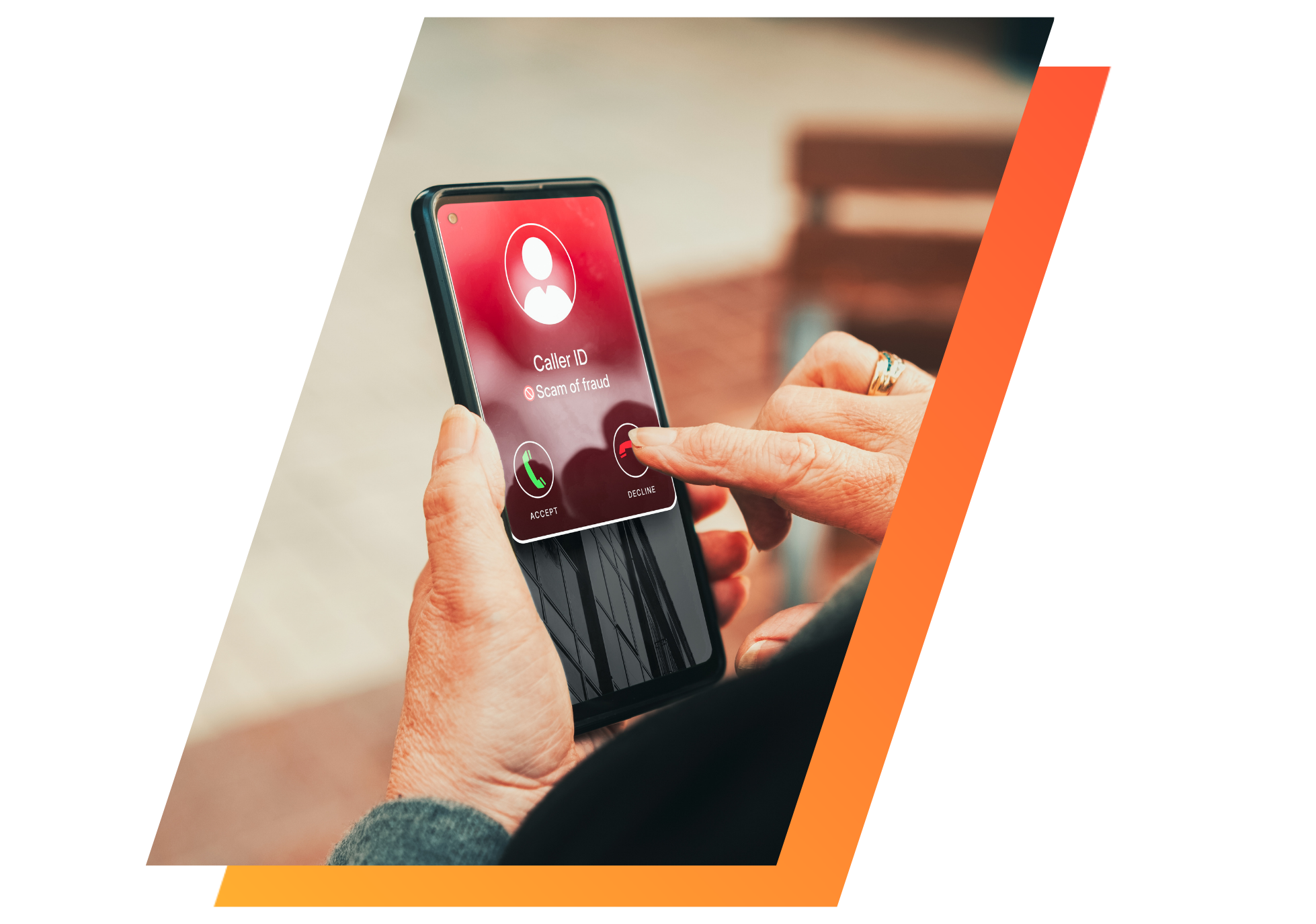
The goal is simple: They want you to share sensitive information to be able to access your money or for you to send money yourself.
To do that, they create urgency. They might tell you your account is at risk, that you need to act immediately, or that they are helping you secure your money or even process a refund. Step by step, they guide you through what feels like a legitimate process.
At Zepz, we continuously monitor these patterns and share guidance like this to help protect customers before fraud happens. But there is a clear line you should never cross – a legitimate company will never ask you to send money to receive money, fix a problem or to protect your account. If that happens, it is a scam.
When something feels urgent or unusual, a few simple rules can make all the difference:
Even pausing for a few seconds can be enough to break the pattern scammers rely on. If something feels off, or too good to be true, trust that instinct. These scams work because they interrupt normal decision-making. They push you to act first and question later. Taking a moment to step back, verify the situation and use official channels can prevent a loss. Because when it comes to your money, certainty matters more than speed.
At Zepz, protecting our customers across Sendwave and WorldRemit is a priority. If something doesn’t feel right, contact us directly through official channels. Our teams investigate every report and take action to help keep customers and cross-border communities safe.
Financial literacy is often talked about within the boundaries of a single country: one currency, one system, one set of rules.
As Financial Literacy Month puts a spotlight on how people manage money, this framing captures only a fraction of how money is used globally today.
For those living and working across borders, money is part of something bigger. It is how rent is paid, how school fees are covered, and how families stay supported across distance. It is a regular responsibility, shaped by exchange rates, fees, delivery times, and what ultimately arrives on the other side.
– Urouj Khan, Director of Product Marketing at Zepz

Learning through experience, not theory
Over time, people figure out how money moves. Not through theory, but because they have to: A transfer arrives slightly short because of unexpected fees. Another takes longer than expected, delaying when money is needed. Sometimes it means checking a transfer twice before sending, knowing that even a small difference can matter on the other side.
These moments are not minor. They shape whether families can depend on that support. They affect whether support arrives on time, whether bills can be paid, and how reliably people can show up for those who depend on them. So choices become more deliberate. People learn what works, what does not, and what can be relied on. This is financial literacy shaped by everyday decisions. It is knowing what works, because it has to.
What people really need: predictability
People may know what to look for, but still struggle to predict what will actually happen. As more people live and work across borders, expectations are shifting. People want clarity before they act and consistency across corridors, so that each decision builds on the last instead of starting from scratch every time.
Financial literacy does not exist in isolation. It depends on whether systems allow people to apply what they know in practice. When information is clear and consistent, experience compounds. When it is not, even familiar decisions can feel uncertain.
Making outcomes clearer
For people sending money across borders, clarity matters. At Zepz, the focus is on reducing that uncertainty.
This means making the outcome of a transfer clear before it happens. What will arrive, when it will arrive, and what it will cost, so expectations match outcomes. With greater consistency at the point of action, decisions become easier to make. Outcomes become more predictable. And people are better able to support the people who depend on them.
That is what financial literacy looks like in real life. Not mastering complex systems, but being able to make confident decisions when it matters most.
At Zepz, our mission is to help people move money across borders with clarity, confidence, and control. Across our brands, that means giving customers the information they need to make informed decisions about their money, especially when supporting loved ones across borders.
To support this mission, we are introducing a clearer way of displaying transfer fees on Sendwave, one of Zepz’s core brands. Our goal is simple: to make it easier for customers to understand what they pay, compare options, and ultimately, choose what works best for them.
– Cat Daniel, VP Growth and Marketing at Zepz
Supporting better choices
Sending money is not just a transaction. It is tied to everyday needs, family responsibilities, and careful budgeting, because every cent matters.
By showing the transfer fee separately from the exchange rate, Sendwave customers can see the full cost of a transfer upfront. This even clearer structure makes it easier for customers to plan their finances and send with confidence.
Finding the perfect way to send
Clear pricing also supports better choices. Different ways of sending money come with different costs. For example, a bank transfer may be more cost-effective than a card top-up, and sending to a bank account can differ from cash pickup. By making these differences visible, customers gain more control over how they send money and can select the option that best fits their needs.
In regions where it is available, the Sendwave Wallet adds another layer of flexibility. It allows people to hold funds in digital dollars, make transfers or withdraw funds when the rates are more favourable, and access lower-cost payout options as they become available. Together, these tools enable more proactive, confident money management.
Clear pricing, competitive rates, and flexible sending options are more than just product updates. They are foundational steps toward building trust and creating a fairer, more sustainable cross-border financial ecosystem. By improving transparency on Sendwave, Zepz continues to invest in long-term value for the communities we serve.
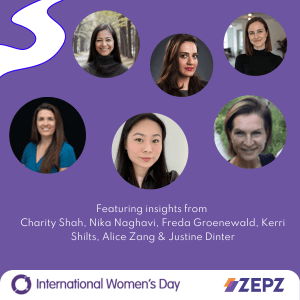
Part two of our International Women’s Day series exploring leadership.
In our previous blog, we looked at what “Give to Gain” means to women across Zepz, and the role mentorship and advocacy play in lifting others up. Support is only one part of the story though, leadership also plays a critical role in shaping environments where people feel empowered to contribute, grow and thrive.
At Zepz, leadership isn’t only about delivering results – it’s about creating a culture where people feel valued and able to make an impact. For Charity Shah, Vice President of Product, leadership is about creating an environment where people feel seen, supported and empowered to make a difference. “I hope my team feels heard. I hope they feel they’re being set up for success, and the work they do is important. I hope they feel empowered to make a change when things are not working. The work we do at Zepz gives us a great opportunity to make a difference. Our mission is to create prosperity and break down barriers for cross-border communities, no matter what their gender. So, having empowered teams that deliver solutions against that mission will have a positive impact on women everywhere Zepz operates.”
That purpose-led approach is echoed by Alice Zang, Senior Product Manager, who believes leadership should be grounded in empathy and values. “I hope I’m able to show that leadership can be empathetic, inclusive and not ego-driven. I hope that we can create a culture that is more sustainable and value-driven.”
Inclusive leadership also depends on male allies who help build fairer environments for everyone. As Arnab Roychowdhury, Head of Compliance, highlights: “I hope I’m modelling leadership that displays fair treatment for my co-workers regardless of their sex.”
– Charity Shah, Vice President of Product

While many leaders are working to create more inclusive workplaces, there is still progress to be made – particularly when it comes to representation and recognition. Nika Naghavi, Director of Strategic Partnerships, reflects on the subtle but persistent challenges many women continue to experience in the workplace and her hopes for the future. “I’d like for the next generation of women not to have to work harder just to be considered equally credible. Many of us have experienced it – subtle moments where you’re interrupted, where your analysis is re-explained back to you, or where the same point seems to land differently when repeated by a male colleague. It’s rarely dramatic. It’s just embedded.”
For her, real progress will come when credibility is no longer shaped by gender. “The change I want to see is simple: credibility that isn’t gendered. An environment where expertise is assumed based on capability, not filtered through bias. Where women can spend their energy shaping strategy and building systems – not managing perception. If the next generation can focus on impact instead of constantly establishing legitimacy, that will be real progress.”
The idea of representation is also a critical factor in driving change forward. As Product Director, Kerri Shilts, explains, the higher you look in many organisations, the fewer women you see. “The most glaring gap remains at the top. As we look further up the corporate ladder, female representation thins out, and that is a systemic problem. When we lack women in senior leadership, we lose out on the diversity of opinion and perspective that drives real innovation.”
Closing that gap requires deliberate action. “Progress requires a concentrated, intentional effort to hire and promote women into executive roles. We need to ensure the leadership table actually reflects the world we live in.”
For Freda Groenewald, Director of Corporate Development, building that future also means changing how we think about career paths – particularly for mothers.“I want future generations of women – especially in fast-paced and (currently) male-dominated industries – to see leadership roles filled with women who are also mothers, without it being framed as extraordinary.”
Policies such as equal parental leave can play a powerful role in normalising caregiving responsibilities. “When caregiving is shared equally by all parents, women are no longer disproportionately impacted. I also hope leadership representation continues to evolve. Not just more women in the room, but more diverse women in the room. Representation changes ambition – when you can see someone who looks like you at the table, you believe you belong there too.”
Justine Dinter, Chief People Officer, sees encouraging progress in organisations that are actively confronting these challenges. “I hope we have made a difference at Zepz through value creation, culture development and I truly think we’re out there in terms of having such naturally diverse, mission driven teams. However, it’s typically true that the percentage representation of female leaders decreases as roles become more senior in a company’s structure. Progress is being made but I hope to see much more of this.”
Alongside representation and policy changes, many of our female leaders also emphasised the importance of confidence, authenticity and community – especially for women starting out in their careers.
For Charity, leadership begins with honesty and vulnerability. “If I could talk to my younger self I’d tell myself that it’s okay to show vulnerability, to be honest, and to ask for help. Do not try to adhere to the traditional mold of leadership. I’m most comfortable when I’m able to show emotions, admit mistakes, say when I don’t know everything and that I need help.”
Kerri highlights the importance of community and supporting one another. “There will always be noise – don’t let it distract you from your value. Be unapologetically true to yourself. Beyond that, don’t try to go it alone. Identify a strong group of friends and seek out female role models who have paved the way. Most importantly: always support other women. Our collective power is much greater than our individual hustle.”
Arnab also encourages confidence, “my advice is to have confidence in your own knowledge and beliefs and to let that confidence come through in what you say and how you act.” A belief shared by Justine who also reminds us that sometimes the most valuable contribution is the one that challenges the room. “Have confidence in being yourself. Be proud of your skills, personality and opinions – if those opinions are different to every other person in the room, that doesn’t make them any less valid. Sometimes the most valuable thought in the room is the different view.”
Part one of our International Women’s Day series celebrating the voices of women at Zepz.
International Women’s Day (IWD) is a moment to celebrate the achievements of women around the world while recognising the work still needed to create more equal opportunities. This year’s theme “Give to Gain” highlighted the power of reciprocity: when individuals, organisations and communities invest in women, opportunities expand, systems grow stronger and societies thrive.
At Zepz, our mission centres around empowering communities and helping people support the ones they love across borders, so that spirit of shared progress resonates deeply. To mark this year’s International Women’s Day, we spoke with inspiring women across Zepz about their experiences, the moments that shaped them, and what it means to support and advocate for one another.
For many women at Zepz, this year’s theme really resonates as it reflects the role mentorship and shared learning have played throughout their careers. For Alice Zang, Senior Product Manager, “Give to Gain” is an important investment in the future. “To get to where we are today, we’ve all benefited from those that invested time and effort in coaching, teaching and advocating for us, so that we’ve been able to do more in our careers. So, by giving mentorship, opportunity to learn and the space to be heard, we continue to pay forward. And at the same time, I find that I always learn something in these conversations too – whether that’s a different perspective or an opportunity for deeper self reflection.”
That idea of paying it forward resonates strongly across Zepz. Product Director, Kerri Shilts, reflects on the importance of supporting the next generation of women. “For me, ‘Give to Gain’ is about the cycle of mentorship – reaching back as you climb up. I make it a priority to mentor several women, acting as a sounding board and providing the guidance I wish I’d had. But it goes beyond just advice. It’s about advocacy. ‘Giving’ means using your voice for those who might be afraid to speak up yet. When we give our courage and our platform to others, we gain a workplace culture that is safer and more empowered for everyone.”
Freda Groenewald, Director of Corporate Development, believes this kind of support creates momentum across entire organisations. “‘Give to Gain’ is also about the multiplier effect of support. The more we invest in each other, the more resilient and innovative our workplaces become.”
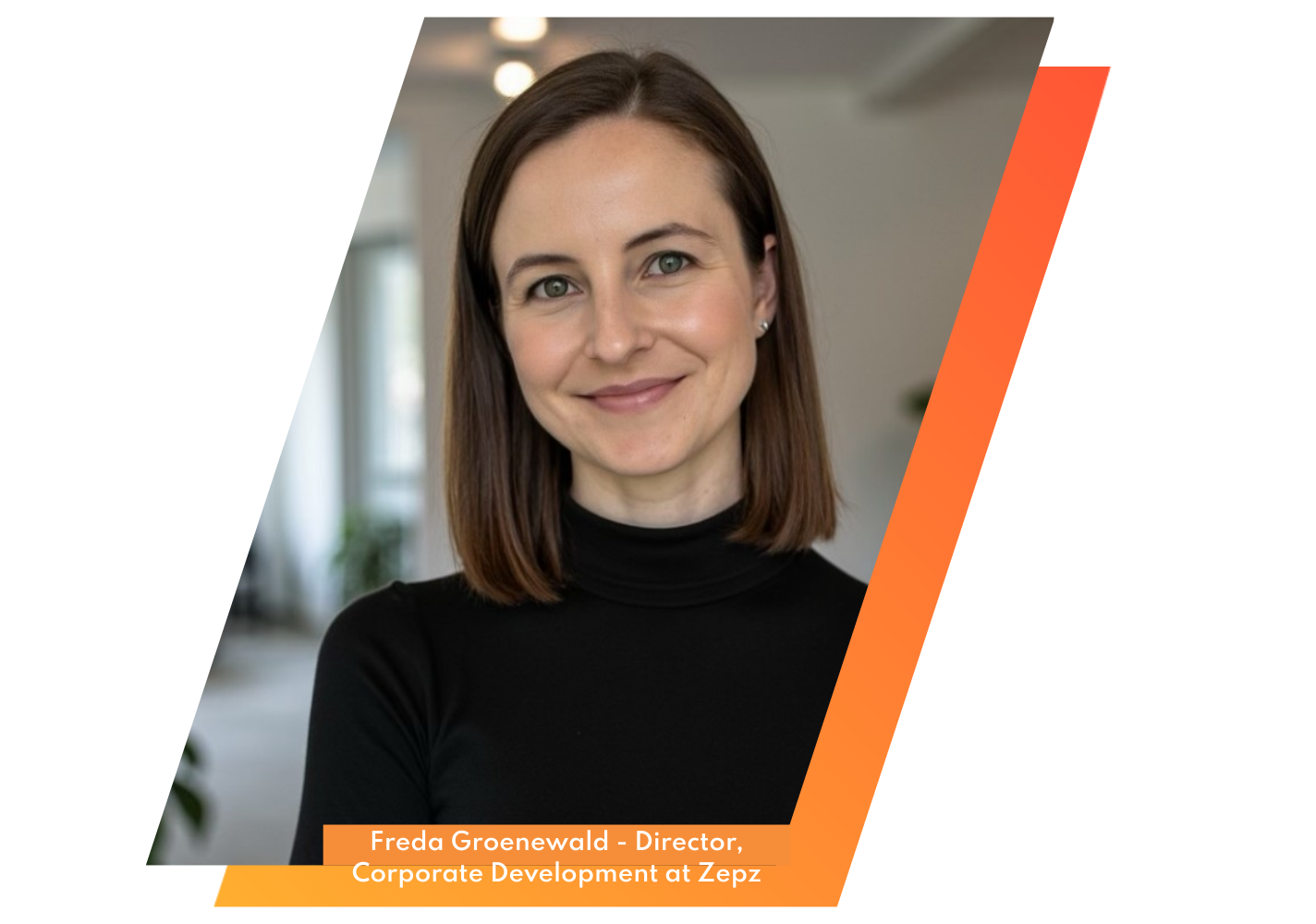
– Freda Groenewald, Director of Corporate Development
This idea can also extend beyond the workplace and into the opportunities we create for future generations. As Nika Naghavi, Director of Strategic Partnerships, outlines: “Throughout my career, I’ve been intentional about learning from strong, technically credible women. That guidance shaped how I think and how I lead. So now I try to pay that forward. But for me, it also goes beyond the workplace. One of my long-term ambitions is to build a foundation focused on female empowerment through technical education and upskilling. I want to help young women who don’t have the means or the opportunity to be able to build the systems that shape the future, not just navigate them. Because when you give women technical power early on, you don’t just change individual lives – you change who gets to design and define the future. And that’s powerful!”
Charity Shah, Vice President of Product, recalls a memorable moment in her career that came from something surprisingly simple – being in a meeting where women were no longer the minority. “I remember joining a virtual meeting and realizing that everyone on the call was a woman. I am so used to being one of the few women in the room, so this was a very nice surprise. To be in a meeting where we had a shared perspective – simply by virtue of being women in tech – felt incredible. I felt acknowledged and supported in a way I hadn’t expected. Every woman on that call had her own journey, and most had experienced being the ‘only woman’ at some point in her career.”
Moments like these highlight why spaces for recognition and connection matter. “I think that’s why International Women’s Day is so important,” Charity adds. “To have a day where we celebrate women and what they have achieved whether on a national, local or personal level. Last year, during International Women’s Day, I spent the day sending slacks to women who I admire to let them know how they inspire me to do better.”
For Freda, returning to work after maternity leave reshaped how she thought about achievement and resilience. “When I returned to work after having a baby, I came back with a completely different perspective – stronger, more empathetic, more focused – but if I’m honest, also lacking confidence and battling imposter syndrome. It made me more aware than ever of the invisible pressures women carry. I’ve realised how critical it is to actively celebrate women’s achievements – not just the visible milestones, but the resilience, trade-offs and unseen strength behind them.”
Nika’s perspective was shaped by a very different experience – one that also highlighted women’s contributions beyond corporate environments. “One moment that has stayed with me was during a field project I worked on in Ghana building economic identities for smallholder cocoa farmers – many of them were women. I remember standing in a rural farming community, speaking to women who were running farms, managing household finances, negotiating sales, and supporting entire families – yet many of them had no formal financial history, no digital footprint, and no recognised economic identity. On paper, they were invisible. In reality, they were driving their local economies.
“That experience shaped how I see International Women’s Day. For me, it’s not only about celebrating those visible in boardrooms and leadership roles. It’s about acknowledging the women whose contributions power economies and communities every day, often without formal recognition, titles or platforms.”
Together, these reflections highlight something powerful: when women support and advocate for one another, the impact extends far beyond individual careers. It shapes stronger teams, stronger organisations and stronger communities. In our next blog post, we’ll explore how that spirit of “Give to Gain” shapes leadership and hear how women across Zepz are opening doors for others.
This week marks an important moment for Zepz and for me personally. As I step into the role of Interim Chief Executive Officer, I do so with a strong sense of responsibility and focus. Having worked closely with our teams in recent years, I have seen first-hand the strength of our business and the momentum we carry into this next phase. From that perspective, I want to share a few reflections on where we stand today and how we are approaching what comes next.
A stronger, more disciplined business
Over the past few years, we have worked deliberately to strengthen the foundations of the business and build for long-term resilience. We simplified how we operate, strengthened financial discipline and unified our platform to create a more efficient and scalable organisation. The results have been tangible: cash-flow profitability, healthy revenue growth and a leaner cost base that positions us to continue broadening our product offering and deepening customer engagement.
As CFO since 2023 and with Zepz since 2021, I have been closely involved in that journey. I have seen first-hand how greater clarity in how we allocate capital, prioritise growth and measure performance has strengthened the business. We operate today with more focus, stronger alignment and a clear sense of accountability. That discipline gives us confidence as we move into the next phase.
None of this has happened in isolation. It reflects the leadership shown across the organisation and the commitment of a global team working toward a shared goal. I want to thank Mark for the role he has played in guiding Zepz through this period of change and progress. We now build on that work together, supported by experienced leaders across our brands and teams who deliver for customers every day.
– Barrie Morris, Interim CEO of Zepz

Building for customers and accelerating responsibly
Our strategy remains consistent: serve cross-border communities with reliable, secure and accessible financial services. Everything we do builds on that focus.
In 2025, the launch of the Sendwave Wallet in more than 100 countries marked an important milestone in that journey. It reflects our evolution from a pure money transfer provider to a broader financial platform that enables customers to send, store and spend in one place. Alongside this, we have strengthened partnerships across the financial ecosystem, reinforcing the credibility, resilience and reach of our platform.
With stronger foundations in place, we are now moving from consolidation to acceleration. We expect send volumes and revenues to grow by more than 20 percent in 2026 as we expand our footprint and continue broadening our financial services offering. Our priorities are clear: deepen engagement in core corridors, scale the Sendwave Wallet and continue investing in infrastructure, compliance capabilities and partnerships that support sustainable, long-term growth.
The search for a permanent Chief Executive Officer is underway. During this period, my focus is firmly on continuing to deliver accelerated growth through relentless execution, all while driving further innovations in the customer experience. I’m personally very excited about our upcoming card launch, stay tuned for more details on this! I’m confident in our continued success with the support of such a strong and passionate leadership team – our team is amazing! Our strategy remains unchanged, and our operations continue with full momentum and clarity.
We have strong foundations, a capable team and clear direction. I’m proud to continue this work alongside colleagues across Zepz as we build the next phase of growth together — with our customers at the centre of everything we do.
In a few days on 24 January, the United Nations will mark its International Day of Education, which recognises the role that learning plays in shaping people and communities. This year’s theme, “The power of youth in co-creating education”, highlights young people as agents of change and reminds us that learning does not stop in childhood.
Education is lifelong, and that includes financial education. As the world evolves, so do the ways people work, live and support each other across borders. Financial education becomes part of how people navigate these systems and make decisions with confidence and dignity. In this context, financial literacy shows up in the small decisions people make every day as they navigate payments, transfers and managing value across borders.
When we talk about financial education at Zepz, we talk about giving people the tools and knowledge to navigate increasingly complex financial systems and make informed decisions about their futures. It’s about breaking down jargon and complexity to give people financial choice and freedom.
For many of the people we serve, from migrants and cross-border workers to students, expats and entrepreneurs, financial learning is not theoretical. It is tied to the practical decisions they need to make every day.
– Urouj Khan, Director of Product Marketing at Zepz
Members of cross-border communities regularly weigh up questions such as:
These are not small choices. They determine how families pay rent, access care and keep children in school. People living and working across borders make financial decisions like these with care and intention every day. Financial education adds confidence and clarity. It helps people compare options, plan ahead and participate more fully in the financial systems that affect their lives.
For people who move across borders, the stakes are even higher. Many financial systems were not built with their needs in mind. Credit history requirements and scoring models can leave entire communities outside the formal economy, not because they lack value, but because they fall outside the system’s view. Financial education helps close this gap by supporting informed decisions and enabling economic participation.
Technology can reinforce this when it is designed and explained responsibly. At Zepz, tools like the Sendwave Wallet give customers new ways to hold digital dollars, support loved ones and move value across borders in faster and more predictable ways.
But financial education does not rest on individuals alone. The responsibility is shared across the ecosystem – from fintechs and payment companies to banks, remittance providers, regulators and governments. Promoting transparency and trust within the global remittance value chain is part of this responsibility. Together, the industry must ensure that financial tools are not only available, but also understandable and trustworthy. That means:
Financial education does not remove every barrier, but it expands the space in which people can act with confidence. And that confidence is what turns access into empowerment.
At Zepz, we’re building the financial infrastructure that enables this empowerment. If you’re interested in shaping what comes next, learn more about working with us here.
As we step into 2026, I’ve been reflecting on what 2025 has meant not just for Zepz, but for the millions of people who trust us with something deeply personal: supporting the people they love across borders.
2025 was a year of focused execution in service of those customers. Across both WorldRemit and Sendwave, we strengthened the foundations of our platform and invested in what matters most to customers: safety, trust, reliability and a simpler experience from start to finish. We improved speed and resilience across our systems and made progress in how we use artificial intelligence to make better decisions and help customers get support faster when they need it.
That same discipline shaped how we ran the business. Over the past few years, we’ve reduced complexity and built a more resilient cost base while also lowering annual operating expenses by almost 50%. These changes matter because they give us the stability and flexibility to keep investing with confidence. That foundation is translating into accelerated profitable momentum. We have achieved over 20 percent volume growth for the year and have exited Q4 2025 with 25 percent revenue growth.
– Mark Lenhard – CEO

But we’re just getting started. One of the most significant milestones of the year was the launch of the Sendwave Wallet. For many people living and working across borders, managing money is still defined by uncertainty. Local currencies can be volatile, access to reliable financial services uneven, and everyday needs often met through workarounds rather than tools designed for real financial lives. The Sendwave Wallet is designed to change that. It gives customers a secure digital-dollar account where they can hold value safely, send and receive money instantly with others, and increasingly use their balance in everyday life. The Wallet is now live across more than 100 countries, with peer-to-peer money movement at its core and new capabilities continuing to roll out.
Crucially, this is no longer just about sending money. Through new borderless cards and payment capabilities, built in partnership with trusted global payments and stablecoin providers, customers will be able to spend their digital-dollar balance where they live and work, on everyday needs, at local merchants, not only move it across borders. That represents a real shift: from remittances as a one-off transaction to money that works as part of everyday life. Alongside this, we continued to strengthen the underlying infrastructure that powers our products across Zepz. We’re encouraged by the partners and institutions who chose to build with us in 2025 and who share our focus on trust, compliance and long-term impact. These relationships allow us to keep investing in better pricing, reliability and new services for customers.
Looking ahead to 2026, our direction is clear. We will continue strengthening our platform, improving the experience across both brands, and deepening the capabilities of the Sendwave Wallet so it becomes even more useful in everyday life. We will keep turning digital dollars into practical value across more moments and more markets, always guided by the real needs of our customers.
I’m proud of the progress we made in 2025 and grateful to our colleagues, partners and the communities we serve for placing their trust in us. We enter 2026 with clarity, momentum and a deep sense of responsibility for what we are building together.
For too long, For millions of people sending money home, every transfer carries meaning. It supports families, creates opportunity and strengthens communities. At Zepz, our mission is to keep these moments simple, safe and accessible.
As more transfers move online, scammers have become more sophisticated. These attempts rarely involve any breach of our systems. Instead, they rely on social engineering, pretending to be a bank, the police or a trusted company, to persuade people to share information they would normally keep private.
With the right awareness and a few simple habits when using either of our brands Sendwave or WorldRemit, digital remittances remain one of the safest ways to support loved ones across borders.
1. Be cautious with unexpected messages or calls. Most scams begin with a contact you weren’t expecting: a message, a call, or a request that feels urgent, and can sometimes even seem to come from a recognised company. Criminals rely on pressure and speed. If something feels unusual, pause and verify before responding. If you’re unsure if the call or contact is genuine, hang up and call back on the phone number you know or the one that’s listed on the official website. Remember, legitimate financial services companies or the police will never ask you for your password or one-time passcodes.
2. Check that you’re speaking to the real company. Fraudsters often create accounts that look almost identical to official ones. They can even spoof numbers so that phone calls or messages appear to come from trusted organisations. They may also reply quickly when you post publicly asking for help.
To stay safe:
• Visit the company’s official website
• Use the support channels listed there
• Avoid links sent by unknown accounts
3. Never share one-time passcodes. One-time passcodes (OTPs) help keep accounts secure.
• Login and password-reset codes always include a “do not share” warning.
• Sign-up verification codes only confirm that a phone number is real during new account creation. They do not give access to an existing profile or complete registration on their own.
– Zaheer Jassat – VP Product
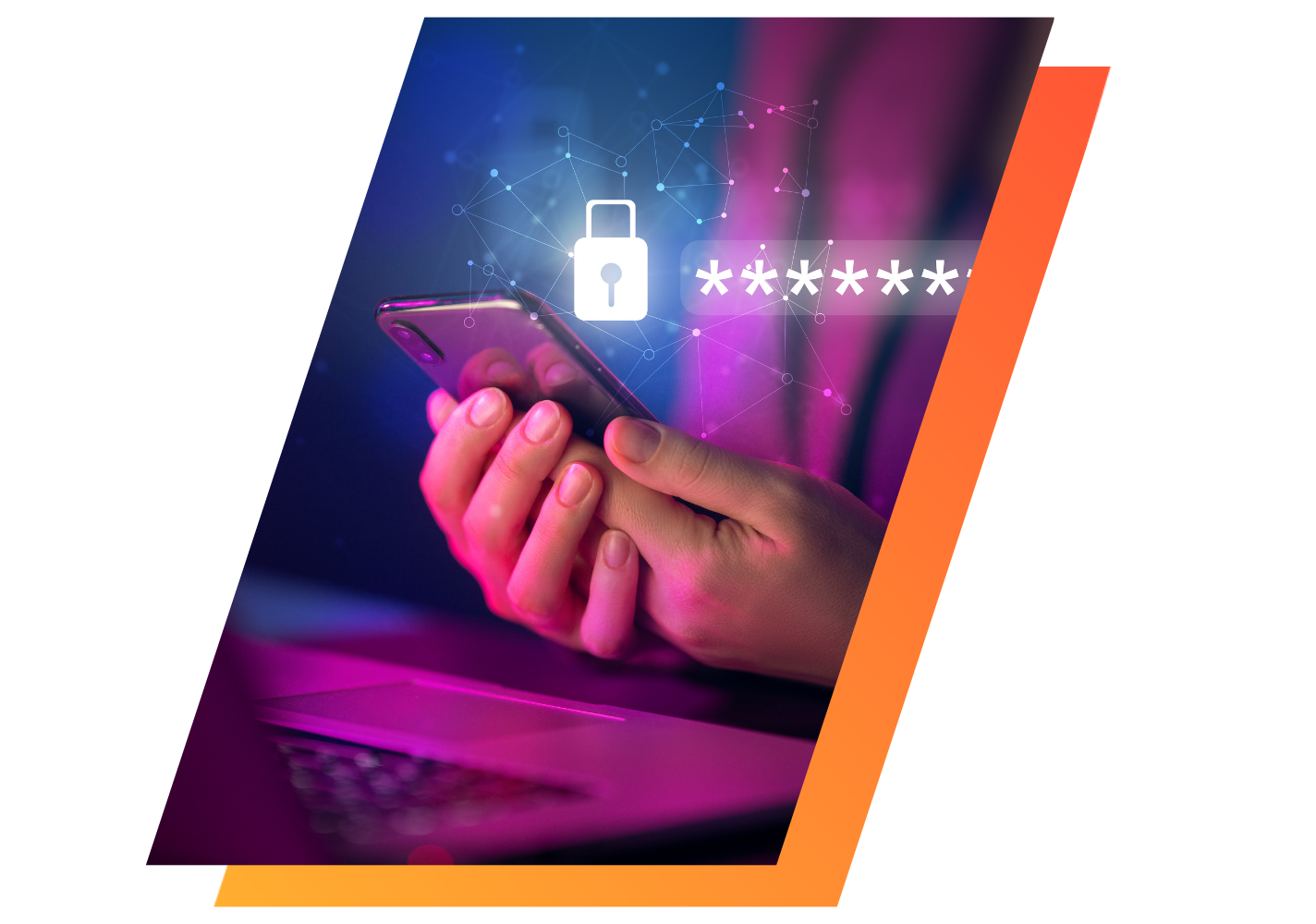
If anyone asks you to read out a code – stop immediately. Also never give anyone access to your computer or banking applications.
4. Use trusted apps and official sources. Download money-transfer apps only from the Apple App Store or Google Play Store. Avoid links shared by unknown senders or search-engine ads.
5. Learn the common tactics scammers use. Fraudsters may:
• create urgency (“your account is at risk”)
• use overly friendly or official language
• offer deals that seem too good to be true
• request payment through unusual methods
• send messages with inconsistent spelling, formatting or links.
If something feels off, trust your instincts.
6. Protect your personal information and devices. Use strong, unique passwords. Keep devices updated. Avoid unsecured public Wi-Fi. Be cautious with unfamiliar attachments, links or USB devices. Never save sensitive information on shared devices.
7. Report anything suspicious. If you’re unsure whether a message is genuine, contact us directly. Our teams investigate every report and work closely with partners, regulators and law-enforcement agencies to protect customers and cross-border communities.
You work hard for your money. We work hard to help keep it safe. With awareness and a few simple habits, you can stay protected online, and continue supporting the people who matter most, wherever they are. For more information on common scams and how to stay safe visit: https://www.takefive-stopfraud.org.uk/
For too long, the pain that real people feel in sending, receiving, and managing money across borders has been ignored by the global payments system, a system largely built by and for the Global North. At Zepz, we believe there is a different way. We stand with and champion the billions across the Global South who move money every day as a lifeline, not as speculation.
It’s for them – and because of them – that I’m personally really proud to introduce Sendwave and the Sendwave Wallet to the Global South, a secure and compliant cross-border account built for these communities.
For more than a decade, our mission has been simple yet powerful: to break barriers in financial access and improve the lives of those most underrepresented. That mission remains unchanged. What’s evolving is the way we bring it to life. We started by making it as easy to send money as it is to send a text, breaking down barriers that once made cross-border payments slow and expensive. That focus helped millions of people support loved ones, access opportunity, and build stability across borders.
Now, we’re taking the next step. With the Sendwave Wallet, we’re moving from sending money to making managing money as simple, reliable, and affordable as possible. It’s another way we’re building on our legacy, while unlocking new possibilities for the communities we serve. And we’re doing it for those we believe deserve it most.
– Mark Lenhard – CEO

Quite frankly it’s about time. The Global South is home to more than six billion people, over eighty percent of humanity. These are the communities underserved by legacy financial systems: families in Africa, Asia, and Latin America navigating volatile currencies, long settlement times, and high fees. This is one of the reasons I became CEO of Zepz: to help build something that truly changes how the world manages money for those who need it most.
The Sendwave Wallet embodies that vision. Beneath the surface, it integrates digital dollar rails powered by stablecoins within a regulated and trusted ecosystem, while connecting seamlessly to traditional fiat systems. But our customers don’t need to understand the technology. They only need to know their money arrives quickly, securely, and in the currency they need. That is purposeful innovation: world-class infrastructure made invisible so people experience only trust, speed, and safety. This isn’t remittances anymore. It’s true financial access, the ability to hold, send, spend, and soon, save and protect money. And this is just the beginning.
We imagine cards, QR payments, incentives on deposits, and much more. Everything you need to live your everyday life; financial services long ago available to the Global North and taken for granted by many of us today. The Wallet is the first bridge in that journey.
We didn’t build it alone. Our regional teams ensured the product reflects real lives and local needs, while our partners at Circle, Solana, Portal made it technically and operationally possible. It is easy to build fast; it is harder to build fast and right. I am proud of how our technology, compliance, and treasury teams worked side by side to make this innovation real.
We are just getting started. The horizon is vast, expanding corridors and connecting major regions into a new era of financial empowerment.
When cross-border communities thrive, everyone prospers.
May 11, 2026
Scammers don’t hack systems, they pressure people. Here’s how to protect yourself.

April 27, 2026

April 8, 2026
March 12, 2026

March 10, 2026
March 9, 2026

January 22, 2026

January 12, 2026

November 24, 2025